Build a Django Discussion Forum: Step-by-Step Tutorial
Learn how to build a complete Django discussion forum with anonymous posting, user interactions, and...
Get instant access to the latest tech news, reviews, and programming tutorials on your device!

🔍 Search Latest International Tech News, Reviews & Programming Tutorials
Learn how to build a complete Django discussion forum with anonymous posting, user interactions, and...

These AI tools offer a range of functionalities to enhance the creative process for vloggers....
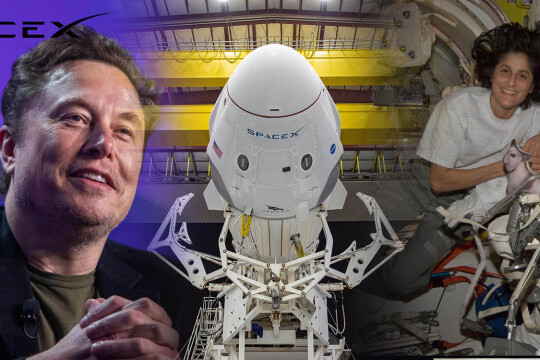
NASA astronaut Sunita Williams is returning to Earth with SpaceX’s Crew Dragon, utilizing advanced splashdown...
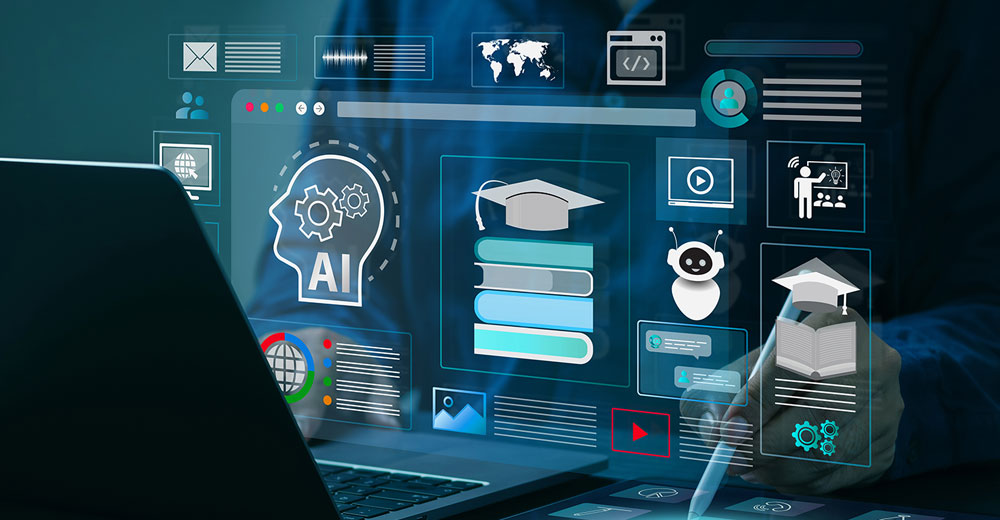
Discover how AI is reshaping tech careers and what skills future tech professionals need. Learn which jobs are emerging, which are evolving, and how to stay relevant in the AI-driven technology landscape.
The technology industry stands at a pivotal crossroads. artificial intelligence has evolved from a specialized niche into a fundamental force reshaping every corner of the tech landscape. For current tech employees and students preparing to enter the field, this transformation raises urgent questions: Will there be jobs left? What skills will matter? How can we prepare for a future where AI capabilities expand exponentially?
The answers are more nuanced and ultimately more optimistic than the dire predictions suggest, but they demand a fundamental shift in how we think about tech careers.
The fear that AI will eliminate tech jobs entirely misunderstands both the nature of technology work and the limitations of AI systems. While AI is remarkably capable at specific tasks, the technology sector requires complex problem-solving, creativity, strategic thinking, and human judgment that current AI cannot replicate.
Consider software engineering, often cited as vulnerable to AI replacement. Tools like GitHub Copilot, ChatGPT, and Claude already generate code from natural language descriptions. Yet software engineering encompasses far more than writing code. Engineers must understand business requirements, make architectural decisions, optimize for scale and performance, collaborate across teams, and solve problems that haven't been clearly defined. These skills remain distinctly human.
However, the nature of tech work is undeniably changing. Tasks that once consumed hours can now be completed in minutes. Junior-level responsibilities that provided entry points into the industry are being automated. The bar for what constitutes valuable human contribution is rising rapidly.
Every tech role is experiencing AI-driven transformation, though the impact varies significantly:
Software Developers and Engineers face perhaps the most visible changes. AI coding assistants now handle boilerplate code, debug syntax errors, and suggest optimizations. This doesn't eliminate the need for developers, but it shifts their focus toward higher-level architecture, system design, and solving novel problems. Tomorrow's developers will be force multipliers, using AI to handle routine tasks while they concentrate on creative solutions and strategic technical decisions.
Data Scientists and Analysts are seeing AI automate much of the data cleaning, basic analysis, and visualization work that once defined entry-level positions. The role is evolving toward asking better questions, designing experiments, interpreting complex results in business contexts, and building AI systems themselves rather than performing analysis AI can now handle.
Quality Assurance and Testing professionals are experiencing dramatic automation of test case generation and execution. The human role is shifting toward designing comprehensive testing strategies, identifying edge cases AI might miss, and ensuring quality in ways that transcend automated metrics.
IT Support and Help Desk positions face substantial disruption as AI chatbots and automated troubleshooting handle routine issues. Remaining roles will focus on complex problems, system administration, and the human elements of support that require empathy and creative problem-solving.
While AI transforms traditional roles, it simultaneously creates entirely new career paths:
AI/ML Engineers and Researchers are obviously in high demand, but the field extends beyond those with PhDs in machine learning. Companies need professionals who can implement, fine-tune, and maintain AI systems, work that requires understanding both the technology and the business context.
AI Ethics and Safety Specialists address the growing need to ensure AI systems behave responsibly, fairly, and safely. This emerging field combines technical knowledge with ethics, policy, and social science.
AI Product Managers bridge the gap between what's technically possible and what's actually useful, requiring deep understanding of both AI capabilities and user needs.
Prompt Engineers and AI Integration Specialists help organizations effectively deploy and use AI tools. While "prompt engineering" may evolve, the underlying skill of mediating between human needs and AI capabilities will remain valuable.
Data Engineering and MLOps roles are expanding as organizations need infrastructure to support AI systems at scale. These positions focus on the pipelines, platforms, and processes that make AI practical in production environments.
Synthetic Data Scientists create training data for AI systems, a crucial role as organizations seek alternatives to sensitive real-world data.
Human-AI Interaction Designers craft interfaces and experiences that make AI systems usable, accessible, and effective for end users.
Technical skills remain important, but the skills that will distinguish successful tech professionals increasingly extend beyond pure technical knowledge:
AI Literacy is becoming non-negotiable. Every tech professional needs to understand what AI can and cannot do, how to work with AI tools effectively, and how AI systems work at a fundamental level. This doesn't mean everyone needs to build neural networks from scratch, but understanding capabilities, limitations, and proper application is essential.
Complex Problem Solving becomes more valuable as AI handles routine problems. The ability to tackle ambiguous, novel challenges that lack clear solutions will differentiate human contribution.
Cross-Disciplinary Knowledge grows in importance. The most impactful tech professionals will understand not just code and algorithms but also the domains where technology applies: healthcare, finance, education, climate, and beyond.
Communication and Collaboration skills matter more, not Less. As AI handles technical Grunt work, the ability to translate between technical and non-technical stakeholders, coordinate across teams, and articulate complex ideas becomes central to tech roles.
Ethical Reasoning and Critical Thinking are essential for navigating the complex implications of AI systems. Tech professionals must evaluate not just whether something can be built but whether it should be built and how to build it responsibly.
Adaptability and Continuous Learning may be the most crucial meta-skill. The pace of change in AI means specific tools and techniques become obsolete quickly. Professionals who can rapidly learn new technologies and adapt to shifting paradigms will thrive.
Strategic Thinking enables tech professionals to see beyond immediate technical tasks to understand business objectives, user needs, and long-term implications of technical decisions.
For those entering or currently in tech careers, several strategies can help navigate the AI-driven transformation:
Build Strong Fundamentals in computer science, mathematics, and systems thinking. While specific tools change rapidly, fundamental principles remain valuable. Understanding algorithms, data structures, system architecture, and computational thinking provides a foundation that transcends any particular technology.
Develop AI Competency through practical projects. Build something with machine learning, experiment with large language models, understand how AI systems are trained and deployed. Hands-on experience demystifies AI and reveals both its power and limitations.
Specialize Thoughtfully by choosing areas where human judgment remains crucial or where AI is creating new opportunities. Healthcare technology, climate tech, security, and emerging AI applications offer spaces where demand is growing.
Cultivate Interdisciplinary Knowledge by studying beyond computer science. Understanding biology, psychology, economics, or other fields creates opportunities to apply technology in domains where you have unique insight.
Practice Working with AI Tools actively. Use AI coding assistants, learn to prompt effectively, understand when to rely on AI and when to question its outputs. The most successful professionals will be those who amplify their capabilities through AI rather than competing against it.
Build Soft Skills Deliberately through collaborative projects, public speaking, writing, and leadership opportunities. These skills often receive less attention in technical education but increasingly differentiate successful careers.
Stay Connected to Real Problems by working on projects that address actual user needs. Understanding the full context of why technology matters and how it's used in practice is invaluable.
Network and Build Community with other professionals navigating similar transitions. The collective intelligence of a strong professional network helps identify opportunities and navigate change.
Looking ahead, several trends seem likely to shape tech careers:
Technology work will become more accessible to non-specialists as AI lowers barriers to entry, while simultaneously demanding higher-level expertise from professionals. This creates a bifurcated landscape where more people can build basic applications, but deep expertise becomes more valuable.
The distinction between "tech jobs" and other jobs will blur as AI and technology permeate every industry. Every role increasingly requires some technical capability, while traditional tech roles require deeper domain knowledge.
The pace of change will remain rapid, making continuous learning not a phase of career development but a permanent state. Successful professionals will build learning into their regular practice.
Human creativity, judgment, and interpersonal skills will become the primary differentiators as technical tasks become more automated. The stereotype of the isolated programmer will give way to tech professionals who are collaborators, communicators, and creative problem-solvers.
The future of tech jobs in the age of AI is neither the utopian vision where everyone is freed from tedious work nor the dystopian nightmare where humans are unemployed. It's a future where technology work evolves, where new opportunities emerge as others transform, and where human creativity and judgment remain central.
For students entering the field, this means building strong fundamentals while staying flexible, developing both technical depth and breadth of knowledge, and cultivating the human skills that complement rather than compete with AI capabilities.
For current tech professionals, it means embracing continuous learning, expanding beyond narrow technical specialization, and actively engaging with AI tools to understand how to amplify rather than be replaced by them.
The technology industry has always been defined by rapid change. AI represents not an end to tech careers but another inflection point in an industry built on transformation. Those who approach it with curiosity, adaptability, and strategic thinking will find not just survival but opportunity in the AI-driven future of technology work.








Comments & Discussion