





Autonomous vehicles and robotics represent artificial intelligence's physical manifestation in the real world, where algorithms must navigate complex, unpredictable environments with safety-critical consequences. Progress in these domains demonstrates AI's advancing capabilities while highlighting remaining challenges in perception, decision-making, and real-world reliability.
Self-driving technology has progressed significantly, though fully autonomous vehicles remain limited to specific contexts. Waymo operates commercial robotaxi services in Phoenix, San Francisco, Los Angeles, and Austin, completing millions of autonomous rides. These vehicles handle complex urban driving scenarios including pedestrians, cyclists, construction zones, and unexpected obstacles.
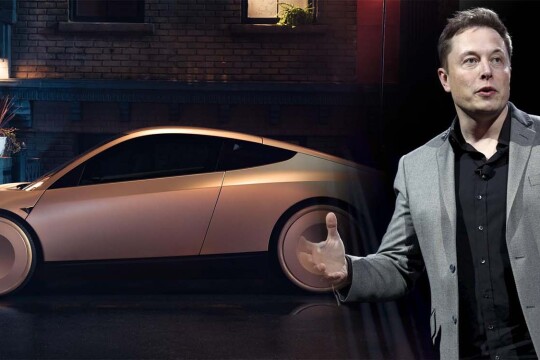
Tesla's approach to autonomous driving differs from competitors by relying primarily on cameras rather than expensive lidar sensors. The company's Full Self-Driving system uses neural networks trained on vast quantities of real-world driving data collected from its vehicle fleet. While impressive in many situations, the system still requires driver supervision and struggles with some edge cases.
The regulatory landscape for autonomous vehicles varies widely across jurisdictions. Some states and cities embrace testing and deployment, while others maintain strict restrictions. The National Highway Traffic Safety Administration is developing federal guidelines, but comprehensive regulation remains evolving. This patchwork complicates nationwide deployment and creates uncertainty for companies investing in the technology.
Safety represents the paramount concern for autonomous vehicles. While human drivers cause the vast majority of accidents, any autonomous vehicle incident receives intense scrutiny. Companies must demonstrate that their systems are safer than human drivers across diverse conditions before widespread public acceptance becomes feasible. This statistical bar requires enormous real-world testing.
The business models for autonomous vehicles are evolving. Robotaxi services offer transportation without vehicle ownership or human drivers. Autonomous delivery vehicles transport goods for e-commerce and food delivery. Long-haul autonomous trucking promises to address driver shortages and reduce transportation costs. Each application presents distinct technical challenges and market dynamics.
Humanoid robots have captured public imagination, with companies like Tesla, Boston Dynamics, and Figure AI demonstrating increasingly capable systems. Tesla's Optimus robot aims to perform general-purpose tasks in factories, warehouses, and potentially homes. These robots combine advanced AI for perception and planning with sophisticated mechanical design for mobility and manipulation.
Industrial robotics has been transformed by AI capabilities. Traditional robots perform repetitive tasks with precision but struggle with variability. AI-powered robots can handle diverse objects, adapt to changing conditions, and learn new tasks without extensive reprogramming. This flexibility makes robots economically viable for a much wider range of applications.
Warehouse automation showcases practical robotics applications at massive scale. Amazon, Alibaba, and logistics companies deploy thousands of robots that move inventory, pack orders, and coordinate with human workers. These systems dramatically improve efficiency while raising questions about employment impacts and the future of warehouse work.
Agricultural robots are addressing labor shortages and improving sustainability. Automated harvesters identify ripe produce and pick delicately using computer vision and precise manipulation. Weeding robots distinguish crops from weeds, reducing herbicide use. Monitoring robots inspect plant health and identify disease early. These applications could transform farming practices.
Healthcare robotics is advancing on multiple fronts. Surgical robots enhance precision and enable minimally invasive procedures. Rehabilitation robots assist patient recovery through consistent, customized exercise programs. Service robots help with patient care tasks in hospitals and eldercare facilities. These applications address healthcare workforce shortages while improving outcomes.
The development of general-purpose robots capable of operating in unstructured human environments represents a grand challenge. Unlike specialized industrial robots, general-purpose systems must handle enormous variability in tasks, environments, and unexpected situations. This requires advances in perception, manipulation, planning, and robustness that push the boundaries of current AI capabilities.
Human-robot interaction and safety are critical considerations as robots move into human-populated spaces. Robots must predict human behavior, communicate intent clearly, and operate safely even when humans act unexpectedly. Cultural factors influence how different societies accept and interact with robots, affecting deployment strategies.
The ethics of automation and robotics extends beyond job displacement to questions of dependence, decision-making authority, and maintaining human skills. As robots handle more tasks, concerns arise about deskilling human populations and creating vulnerabilities if systems fail. Thoughtful integration of robotics preserves human agency while capturing technology benefits.
Looking ahead, autonomous vehicles and robotics will become increasingly prevalent and capable. Advances in AI perception, planning, and control will enable operation in ever more complex environments. The integration of these physical AI systems into society will continue gradually, driven by demonstrated safety and value while addressing legitimate concerns about employment, safety, and societal impacts of automation at scale.







Comments & Discussion
Join the discussion by logging into your account.