

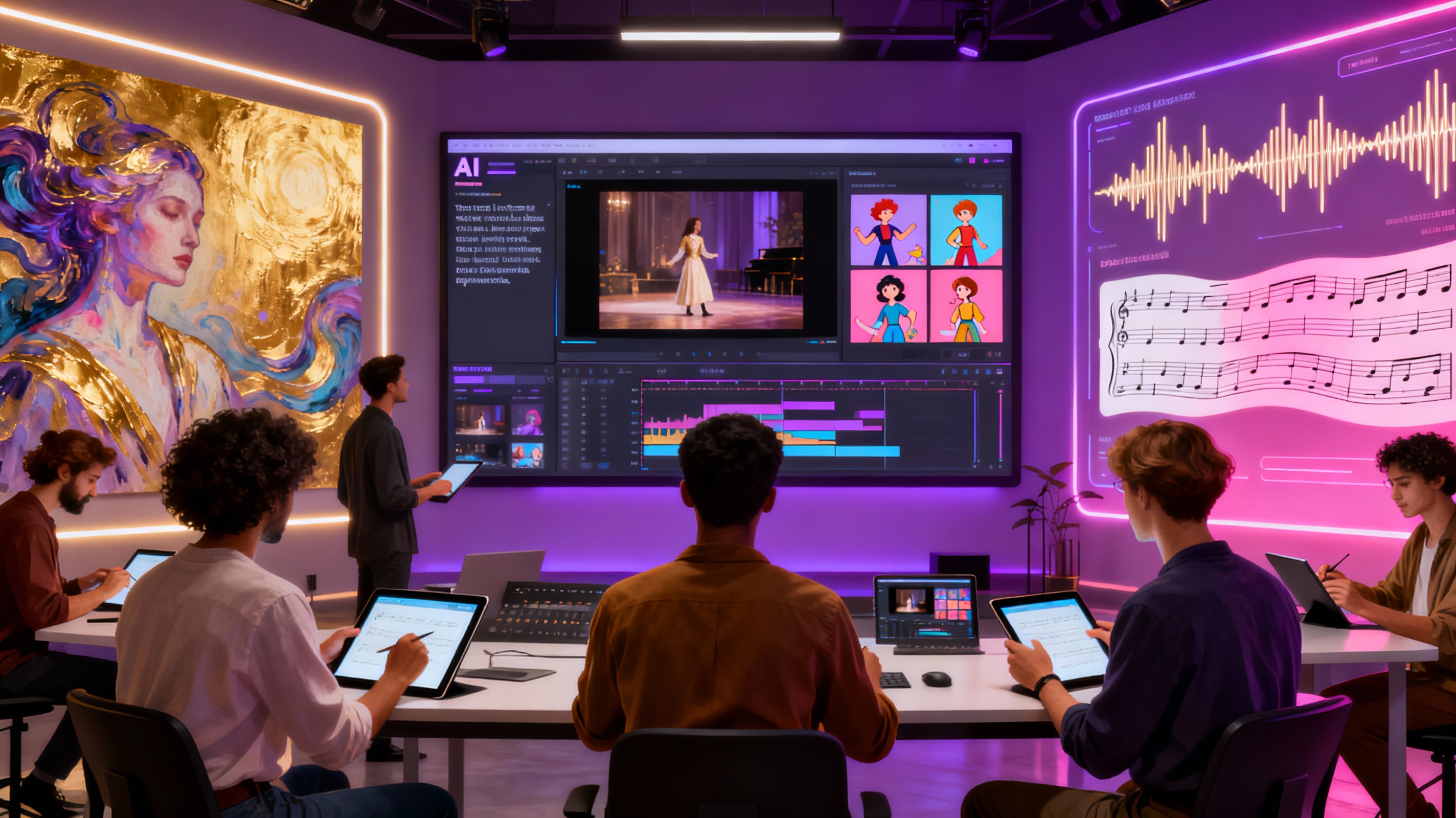
artificial intelligence is profoundly impacting creative industries, generating both excitement about new possibilities and controversy over authenticity, copyright, and the nature of creativity itself. AI tools that generate images, compose music, write stories, and produce video content are transforming creative workflows and democratizing access to creative expression while raising fundamental questions about art and authorship.
Image generation AI has captured public imagination with systems like Midjourney, DALL-E, and Stable Diffusion. These tools create stunning artwork from text descriptions, enabling anyone to produce professional-quality visuals without traditional artistic training. Users describe desired images in natural language, and the AI generates options matching those descriptions, often with remarkable detail and artistic style.
The applications of AI image generation span numerous fields. Marketing professionals create advertising visuals and social media content. Game developers generate concept art and textures. Filmmakers produce storyboards and pre-visualization materials. Individual creators explore artistic visions without expensive tools or specialized skills. This accessibility democratizes visual creativity.
However, AI art raises contentious copyright and attribution questions. These systems train on vast collections of existing artwork, often without explicit permission from original creators. Artists argue this constitutes unauthorized use of their work. Copyright law struggles to address whether AI-generated art infringes on training data creators' rights or represents transformative fair use.
The question of AI art's authenticity generates heated debate. Some argue that true art requires human intention, emotion, and experience that AI cannot possess. Others contend that AI is simply a new tool, and the creativity lies in how humans use it. The debate echoes historical controversies surrounding photography, digital art, and other technologies that challenged traditional definitions of artistic creation.
Music generation AI enables composition, production, and even performance without traditional musical training. Systems like OpenAI's Jukebox, Google's Magenta, and various commercial tools can generate original music in specified styles, create accompaniments for melodies, or remix existing tracks. These capabilities are transforming music production workflows and expanding creative possibilities.
Musicians use AI in diverse ways. Some employ it for inspiration, generating ideas that they develop further. Others use AI for practical tasks like mastering, mixing, or creating placeholder tracks. A few explore fully AI-generated music as an artistic statement. The technology serves different roles depending on the creator's goals and approach.
The music industry faces similar copyright challenges as visual art. AI models trained on copyrighted music raise questions about whether generated output infringes on training data. High-profile disputes have emerged when AI-generated songs resembled existing artists' work. Determining appropriate compensation models and attribution for AI music remains unresolved.
Text generation AI impacts writing, journalism, and content creation. Large language models can draft articles, generate marketing copy, write fiction, and produce scripts. While not replacing human writers, these tools accelerate certain workflows and democratize content creation. However, concerns about quality, originality, and the devaluation of professional writing persist.
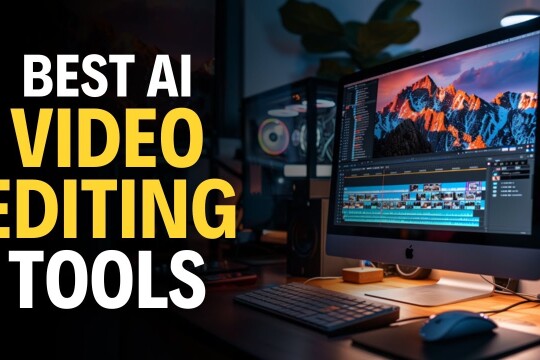
Video generation represents AI's newest frontier in creative applications. OpenAI's Sora and similar systems generate high-quality video from text descriptions, potentially revolutionizing film production, advertising, and content creation. The ability to create complex scenes without filming, actors, or extensive post-production could dramatically reduce production costs and timelines.
The entertainment industry is cautiously exploring AI while navigating concerns from creative workers. The 2023 Hollywood strikes included provisions addressing AI use in scriptwriting and actor likenesses. These agreements attempt to protect creative professionals while allowing beneficial AI applications. Finding the right balance remains challenging as capabilities advance.
AI's role in game development is expanding rapidly. Procedural generation creates game worlds, levels, and assets. AI assists with character animation, dialogue generation, and adaptive storytelling. These capabilities enable smaller teams to create ambitious games and allow dynamic content that responds to player actions.
Synthetic media and deepfakes present both creative opportunities and serious concerns. The ability to create realistic images and videos of people doing or saying things they never did enables new forms of entertainment and artistic expression. However, the same technology facilitates misinformation, fraud, and abuse. Balancing creative freedom with preventing harm requires careful consideration.
Authentication and provenance systems for digital content are becoming essential. Blockchain-based approaches and digital watermarking aim to track content origins and modifications. These systems help distinguish human-created work from AI-generated content and maintain chains of attribution. Such infrastructure protects creators while enabling appropriate AI use.
The education of future creative professionals must address AI realities. Art schools, music programs, and writing workshops are incorporating AI tools into curricula while emphasizing skills that complement rather than compete with AI. Critical thinking about when and how to use AI, combined with uniquely human creative capacities, prepares students for evolving creative landscapes.
Looking forward, AI will become an integrated part of creative toolkits rather than a separate category. The most successful creators will likely be those who effectively combine AI capabilities with human creativity, judgment, and emotional intelligence. The technology promises to enhance rather than replace human creativity, though realizing this positive vision requires addressing legitimate concerns about attribution, compensation, and the value placed on human creative work.


Comments & Discussion
Join the discussion by logging into your account.