Build a Django Discussion Forum: Step-by-Step Tutorial
Learn how to build a complete Django discussion forum with anonymous posting, user interactions, and...
Get instant access to the latest tech news, reviews, and programming tutorials on your device!

🔍 Search Latest International Tech News, Reviews & Programming Tutorials
Learn how to build a complete Django discussion forum with anonymous posting, user interactions, and...

These AI tools offer a range of functionalities to enhance the creative process for vloggers....

NASA astronaut Sunita Williams is returning to Earth with SpaceX’s Crew Dragon, utilizing advanced splashdown...
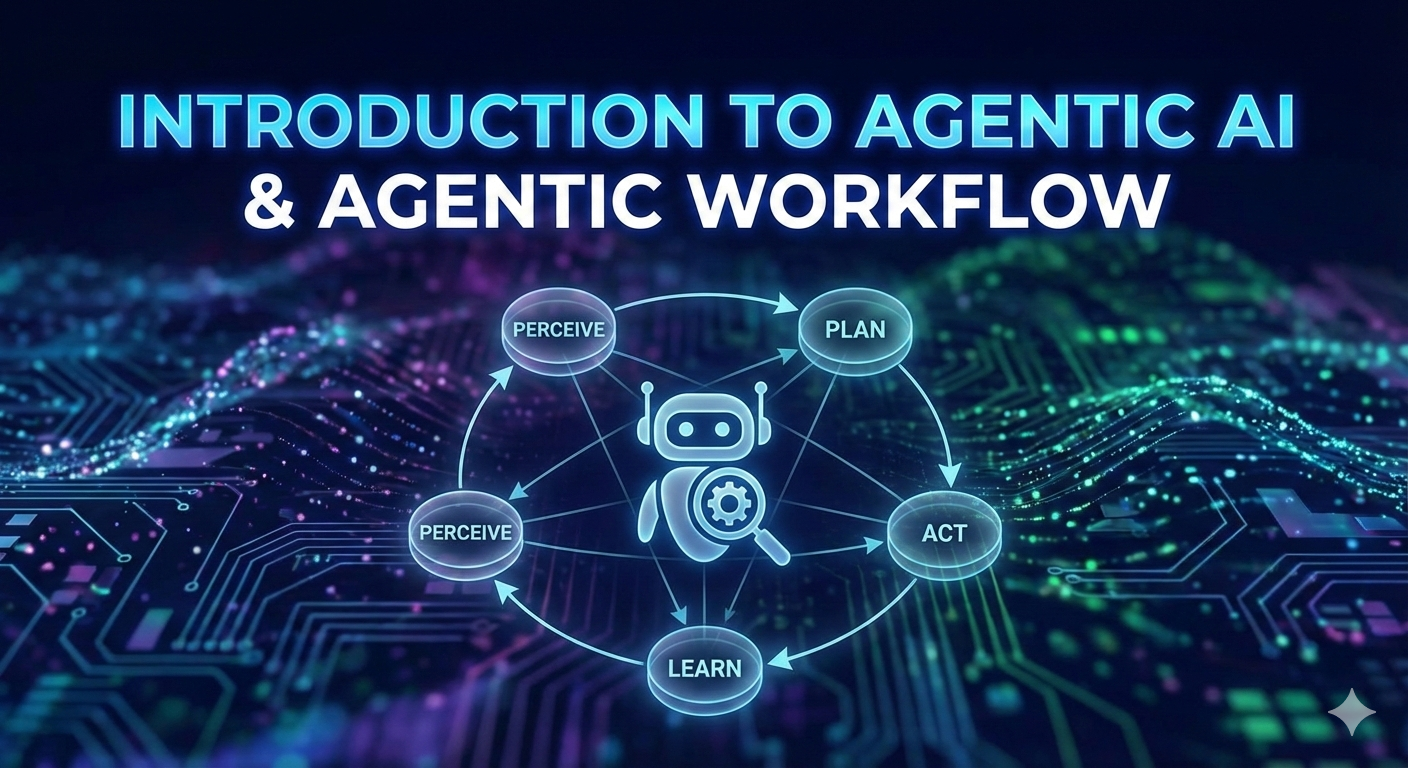
Discover agentic AI and agentic workflows - autonomous AI systems that can plan, execute tasks, and make decisions independently. Learn how these intelligent agents are transforming business automation and productivity.
artificial intelligence has evolved through distinct phases. First came rule-based systems that followed explicit instructions. Then machine learning enabled AI to recognize patterns and make predictions. Large language models brought natural language understanding and generation. Now we're entering the age of agentic AI, where artificial intelligence doesn't just respond to prompts but acts autonomously to achieve goals, make decisions, and execute complex workflows without constant human intervention.
This shift from passive AI tools to active AI agents represents one of the most significant developments in artificial intelligence, with profound implications for how we work, automate tasks, and solve complex problems.
Agentic AI refers to artificial intelligence systems that possess agency—the capacity to act independently, make decisions, pursue goals, and interact with their environment to accomplish objectives. Unlike traditional AI that waits for instructions and provides outputs, agentic AI can plan multi-step processes, use tools, gather information, adapt strategies based on results, and work toward defined goals with minimal human oversight.
The key characteristics that define agentic AI include:
Autonomy means these systems can operate independently once given a goal, determining their own action sequences without requiring step-by-step human direction. An agentic AI might receive the objective "analyze our competitors' pricing strategies" and independently research competitors, gather data, perform analysis, and generate insights.
Goal-Directed Behavior distinguishes agents from simple reactive systems. Agentic AI understands objectives and works persistently toward achieving them, adjusting approaches when obstacles arise.
Tool Use enables these agents to interact with external systems, databases, APIs, and software applications. An agentic AI might search the web, query databases, run code, send emails, or manipulate documents as needed to accomplish its goals.
Planning and Reasoning allow agents to break complex goals into manageable steps, anticipate obstacles, and devise strategies. Rather than following a predetermined script, they can think through problems and create action plans.
Learning and Adaptation help agents improve through experience, learning from successes and failures to refine their approaches over time.
Environmental Awareness gives agents the ability to perceive their context, understand the state of systems they interact with, and respond appropriately to changing conditions.
Understanding how agentic AI works requires examining its core components:
The Reasoning Engine serves as the brain of an AI agent, typically powered by large language models like GPT-4, Claude, or specialized models. This engine interprets goals, plans actions, and makes decisions about what to do next.
Memory Systems provide agents with both short-term working memory to track current tasks and long-term memory to retain information across sessions. This allows agents to learn from past experiences and maintain context over extended periods.
Tool Integration Layer connects agents to external capabilities—APIs, databases, software applications, and other resources the agent might need. This is what enables an agent to actually take actions in the world rather than just generating text.
Perception Modules allow agents to gather information from their environment, whether that's reading documents, processing images, monitoring system states, or accessing real-time data streams.
Action Execution Systems translate the agent's decisions into concrete actions, whether that's writing code, sending messages, making API calls, or updating databases.
Feedback Loops enable agents to observe the results of their actions and adjust accordingly, creating a cycle of perception, decision, action, and observation.
While individual AI agents are powerful, agentic workflows represent the orchestration of multiple agents or multi-step agent processes to accomplish complex objectives. These workflows combine autonomous agents with structured processes, human oversight points, and inter-agent collaboration.
Sequential Agentic Workflows involve agents completing tasks in order, with each agent's output becoming the input for the next. For example, a content creation workflow might have one agent research a topic, another draft an article, a third edit for clarity, and a fourth optimize for SEO.
Parallel Agentic Workflows deploy multiple agents simultaneously to work on different aspects of a problem. A business intelligence workflow might have agents simultaneously analyzing different markets, all feeding results into a synthesis agent that creates comprehensive insights.
Hierarchical Agentic Workflows organize agents in supervisor-worker relationships. A supervisor agent breaks down complex tasks and delegates to specialist agents, then integrates their results. This mirrors human organizational structures.
Collaborative Agentic Workflows enable agents to work together, sharing information and coordinating actions. Multiple agents might collaborate on software development, with one handling backend code, another managing frontend, and a third coordinating integration.
Human-in-the-Loop Workflows strategically position humans at critical decision points within agent workflows, combining agent autonomy for routine tasks with human judgment for high-stakes decisions or creative direction.
Agentic AI is already transforming numerous domains:
Software Development is seeing revolutionary changes through coding agents that can understand requirements, write code, test implementations, debug errors, and even deploy applications. These agents don't just autocomplete code—they can architect entire features, understand existing codebases, and make architectural decisions.
Customer Service has evolved beyond simple chatbots to agents that can understand complex issues, access customer data, coordinate with multiple systems, escalate appropriately, and follow up on resolutions. These agents handle multi-turn conversations and complex problem-solving.
Research and Analysis benefits from agents that can conduct literature reviews, gather data from multiple sources, perform statistical analysis, identify patterns, and generate comprehensive reports with minimal human guidance.
Business Process Automation extends far beyond traditional robotic process automation. Agentic AI can handle exceptions, make decisions based on context, coordinate across systems, and adapt processes based on changing conditions.
Data Analysis and Business Intelligence leverages agents that can access databases, clean data, perform sophisticated analyses, generate visualizations, and produce insights without requiring data scientists for every query.
Personal Productivity is enhanced by agents that manage calendars, prioritize emails, draft responses, coordinate meetings, track tasks, and handle routine administrative work that consumes significant human time.
Healthcare Administration employs agents for insurance verification, appointment scheduling, medical record management, and billing coordination, allowing healthcare professionals to focus on patient care.
Legal Research and Document Review uses agents to analyze case law, review contracts, identify relevant precedents, and flag potential issues in legal documents, dramatically accelerating processes that traditionally required armies of associates.
Building agentic AI systems requires several technological components:
Large Language Models provide the reasoning and natural language capabilities that enable agents to understand goals, plan actions, and interact in human-like ways. Models like GPT-4, Claude, and others serve as the cognitive foundation.
Agent Frameworks such as LangChain, AutoGPT, BabyAGI, and CrewAI provide structured approaches to building agents, handling common patterns like tool use, memory management, and multi-step reasoning.
Vector Databases like Pinecone, Weaviate, and Chroma enable agents to store and retrieve information efficiently, supporting long-term memory and knowledge retrieval.
API Integration Platforms connect agents to external services, allowing them to interact with the vast ecosystem of digital tools and data sources.
Orchestration Systems manage complex workflows, coordinate multiple agents, and ensure reliable execution of multi-step processes.
Monitoring and Observability Tools track agent behavior, performance, and decision-making, crucial for debugging and ensuring agents operate as intended.
The benefits of agentic AI extend across multiple dimensions:
Scalability allows organizations to handle vastly more tasks simultaneously. An agent workforce can scale up or down instantly based on demand without the constraints of human hiring and training.
Consistency ensures that tasks are performed the same way every time, eliminating variability in quality and approach that naturally occurs with human workers.
Speed enables agents to complete tasks in minutes or hours that might take humans days or weeks, particularly for information gathering and analysis.
24/7 Availability means agents never sleep, take breaks, or go on vacation. They can monitor systems, respond to issues, and complete work around the clock.
Cost Efficiency can be dramatic for routine tasks, though this must be balanced against development and maintenance costs.
Handling of Routine Work frees humans from repetitive tasks, allowing them to focus on creative, strategic, and interpersonal work that requires human judgment and creativity.
Despite their promise, agentic AI systems face significant challenges:
Reliability and Errors remain concerns. Agents can make mistakes, misunderstand objectives, or pursue goals in unexpected ways. Unlike human workers who recognize when something seems wrong, agents may confidently execute flawed plans.
Control and Alignment pose fundamental challenges. Ensuring agents do what we want, not just what we asked for, requires careful objective specification and robust safety mechanisms.
Hallucination and Fabrication inherited from underlying language models mean agents may generate plausible-sounding but incorrect information, particularly problematic when agents act on such information.
Cost Considerations can be substantial. While agents save human time, API calls to large language models, tool usage, and infrastructure costs can add up quickly for complex workflows.
Security Risks emerge from giving AI systems access to tools, data, and systems. Compromised or misaligned agents could cause significant damage.
Lack of True Understanding means current agents operate through pattern matching and statistical associations rather than genuine comprehension, limiting their ability to handle truly novel situations.
Difficulty with Ambiguity poses challenges when objectives aren't perfectly specified or when situations require nuanced judgment that depends on implicit human values and priorities.
Integration Complexity makes implementing agentic systems challenging in organizations with legacy systems, complex technical environments, and varied data formats.
Organizations successfully deploying agentic AI follow several key principles:
Start Small and Specific by identifying well-defined, contained tasks where agent success can be measured clearly. Prove value in limited domains before expanding.
Design Robust Guardrails including approval steps for high-stakes actions, spending limits, restricted tool access, and human oversight at critical junctures.
Implement Comprehensive Monitoring to track agent decisions, actions, and outcomes. Visibility is essential for debugging and ensuring agents behave appropriately.
Create Clear Objectives by specifying goals precisely, including constraints, priorities, and success criteria. Vague objectives lead to unpredictable agent behavior.
Build Feedback Mechanisms allowing agents to ask for clarification when uncertain and humans to provide guidance when agents go off track.
Plan for Failure Gracefully by implementing error handling, rollback capabilities, and safe failure modes so agent mistakes don't cause catastrophic problems.
Maintain Human Expertise in the loop for complex decisions, creative work, and situations requiring ethical judgment or contextual understanding beyond the agent's capabilities.
Iterate and Improve by analyzing agent performance, identifying failure patterns, and continuously refining prompts, tools, and workflows based on real-world results.
Looking ahead, several trends will shape the evolution of agentic AI:
Increased Autonomy as models become more capable and reliable, allowing agents to operate with Less human supervision across broader domains.
Multi-Agent Collaboration will become more sophisticated, with specialized agents forming teams that rival human organizations in coordination and effectiveness.
Personalization will create agents tailored to individual preferences, work styles, and needs, becoming truly personalized AI assistants.
Cross-Platform Integration will enable agents to work seamlessly across different tools, platforms, and systems, creating unified AI-powered workflows.
Better Reasoning through advances in AI models will expand the complexity of problems agents can tackle independently.
Industry-Specific Agents trained on domain knowledge will provide specialized expertise in fields like medicine, law, engineering, and finance.
Regulation and Governance frameworks will emerge to address the ethical, legal, and societal implications of autonomous AI systems making decisions and taking actions.
Agentic AI and agentic workflows represent a fundamental shift in how we think about artificial intelligence—from tools that assist us to systems that act on our behalf. This evolution promises tremendous benefits in productivity, efficiency, and problem-solving capability, while also raising important questions about control, safety, and the changing nature of work.
For organizations, the opportunity lies in identifying processes where autonomous agents can add value while maintaining appropriate human oversight. For individuals, understanding agentic AI provides insight into both emerging career opportunities and how our relationship with technology is evolving.
The age of agentic AI is not a distant future—it's unfolding now. Those who understand these systems, their capabilities, and their limitations will be best positioned to harness their potential while navigating their challenges. As agents become more capable and workflows more sophisticated, they will reshape industries, redefine productivity, and create new possibilities we're only beginning to imagine.
The question is no longer whether agentic AI will transform how we work, but how quickly we can adapt to make the most of these powerful new capabilities.







Comments & Discussion